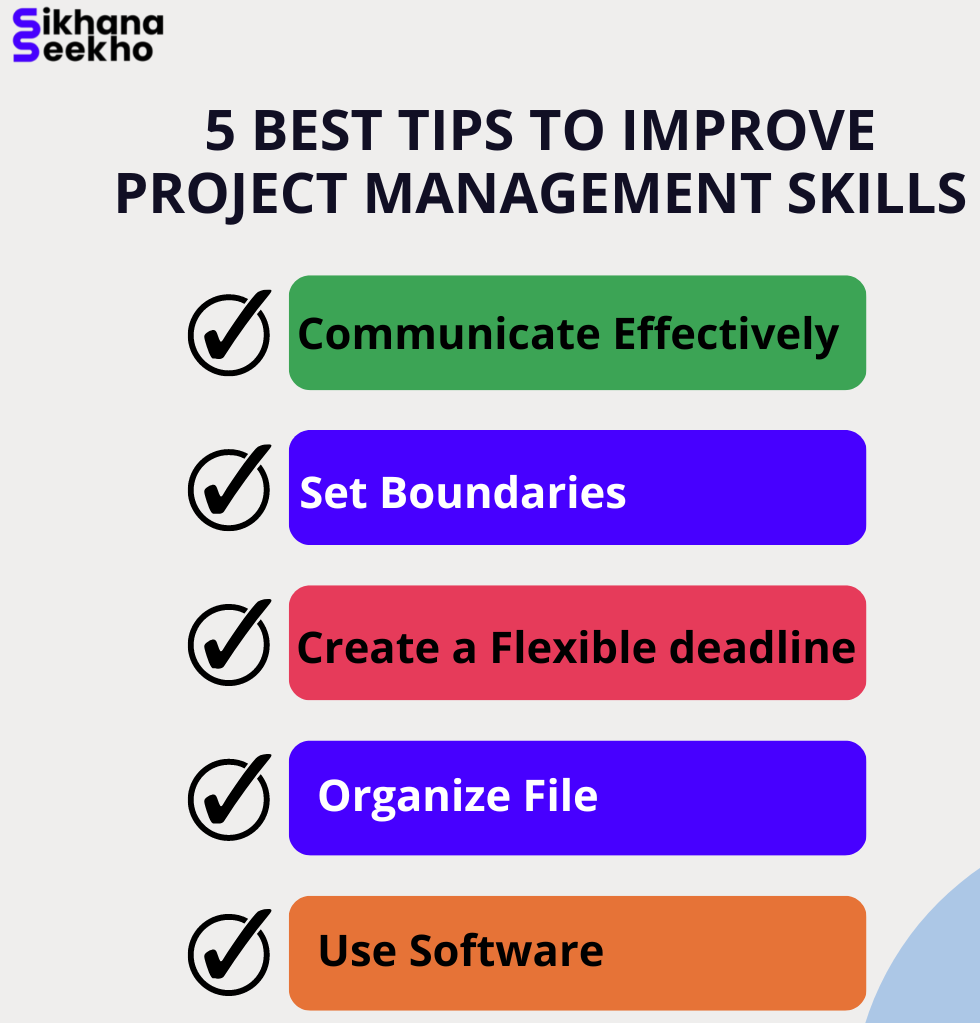
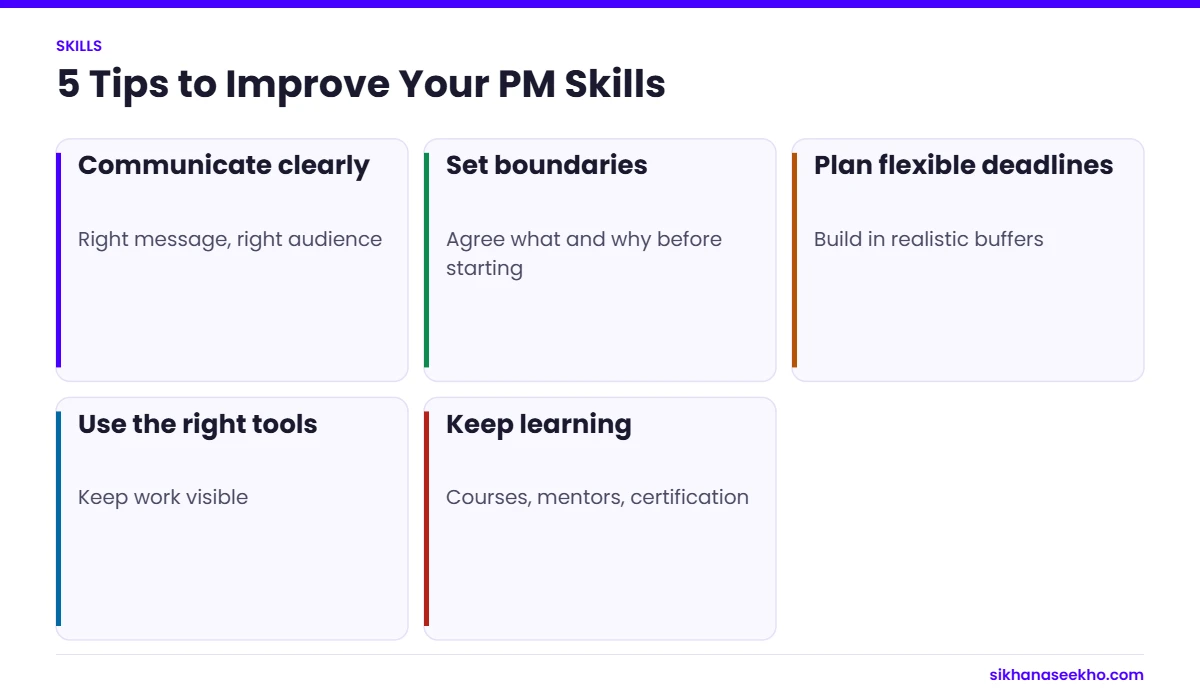
How can you improve your project management skills? Earning or renewing a project management certificate is one way, but there are many other opportunities to hone your project management skills for even greater success on the job. You can improve your skills by using the latest software tools
- Communicate effectively
- Set boundaries
- Create a Flexible deadline
- Organize file
- Use software
Communicate Effectively:
Quality management is a continual process improvement activity based on project requirements. The project manager will determine the most effective means of communication with stakeholders. Communication is important for project success because most projects need more communication skills. Here I mentioned some core concerns related to communication.
The key considerations include the following:
- Who needs information and is authorized to receive it?
- When is the information needed?
- What format should the communication be in?
- Where is the information stored?
- How can it be retrieved?
Communicate with your team using software for effective communication and become more professional. Send your information using PMO (Project Management Office) to your senior management, which would be more effective and presentable. But you can keep them better informed yourself and let them see you in action.
Set Boundaries:(What and Why)
Project boundaries generally define the project details and what is included in the project work.
It would define the project statement of the work and the Scope baseline.
Planners must know a project’s boundaries to produce a project scope statement.
A project manager should focus on and align out-and-out boundaries.
Create a Flexible Deadline:
Flexible deadlines are directly linked to the following:
- Time
- Money
- Customer satisfaction
Time and Money
The flexible deadline can improve project management skills. By using this technique, the deadline increases the project manager’s time to complete the XYZ project, and avoiding the crashing technique could save money. You can realize where you spend your time, and you’ll be better able to analyze your workday and discover where you can adjust your time.
Customer Satisfaction
The most durable task to fulfill the customer demand in any project. A flexible deadline would be customer-friendly. You can satisfy your customer according to the statement of the work.
Organize File
Organize your file using update management software, whatever you want, and it will save time by creating a clear file system, whether digital or physical. Organizing resources may take more time on the front end but will save you valuable time in the future.
Use Software
The software helps to improve the efficiency of the projects; much different software performs differently, like PMO, Jira, Zoho, and PSA (Professional Services Automation). The software saves you valuable time. PSA maintains all billing, manages resources, budget, and timeline, and covers all project features. PSA is beneficial for both internal and external users shared with the client.
Build these skills into a weekly routine
Knowing the tips is the easy part. The project managers who improve fastest turn them into habits. Here is a simple weekly routine that puts each one into practice.
- Monday: plan the week. Review your schedule, confirm the three most important outcomes for the week and check that deadlines still have enough buffer.
- Tuesday: stakeholder check-in. Send a short update to each key stakeholder. Ask one question about their priorities.
- Wednesday: risk and issue review. Spend 20 minutes on the risk register. Close what is resolved and add anything new.
- Thursday: tidy the project files. Make sure the latest plans, decisions and approvals are saved where the team can find them.
- Friday: reflect. Write down one thing that went well and one thing you would do differently next week.
How to measure your improvement
Skills improve faster when you can see progress. Track a few simple indicators over a quarter:
- How often milestones are hit on the date first agreed.
- How many change requests arrive after scope sign-off.
- Stakeholder satisfaction, using a two-question pulse survey at each milestone.
- How long the team waits for decisions from you.
Learning resources that make a difference
- A recognised certification. CAPM or PRINCE2 Foundation if you are new, PMP once you have a few years of experience.
- A mentor. An experienced project manager who can review your plans and help you handle difficult conversations.
- Free templates. Start from proven structures such as a risk register or RACI matrix rather than building from scratch.
- Lessons learned. Read the lessons learned from past projects in your organisation before you start a new one.
Improving as a project manager is a steady process. Pick one skill from this list, practise it for a month, then move on to the next.
Pingback: CAPM Certification: An Entry-Level Project Management Credential
Pingback: Data Representation in Project Management
Pingback: How to Become a Project Manager Without a Degree