
A project management portfolio is a short collection of real projects that shows employers how you plan, lead and deliver work. Include 3 to 5 projects, each with the goal, your role, the tools and documents you used, and measurable results such as time saved, budget, team size or outcome.
Learn what to include in your project management portfolio, especially as a beginner or freelancer. Build a compelling project management portfolio to stand out in your job search.
A well-crafted project management portfolio is your ticket to standing out in a competitive job market. Whether you’re a beginner, a freelancer, or an experienced professional, showcasing your skills and achievements through a portfolio can make a significant difference. This guide walks you through every step of building a strong project management portfolio, ensuring you highlight your best work and land your next opportunity.
Why You Need a Portfolio
In today’s job market, employers want more than just a resume. A portfolio demonstrates your ability to deliver results, solve problems, and lead teams. It provides concrete evidence of your skills and proves you can handle real-world challenges. By compiling your accomplishments, you create a powerful narrative that sets you apart from other candidates.
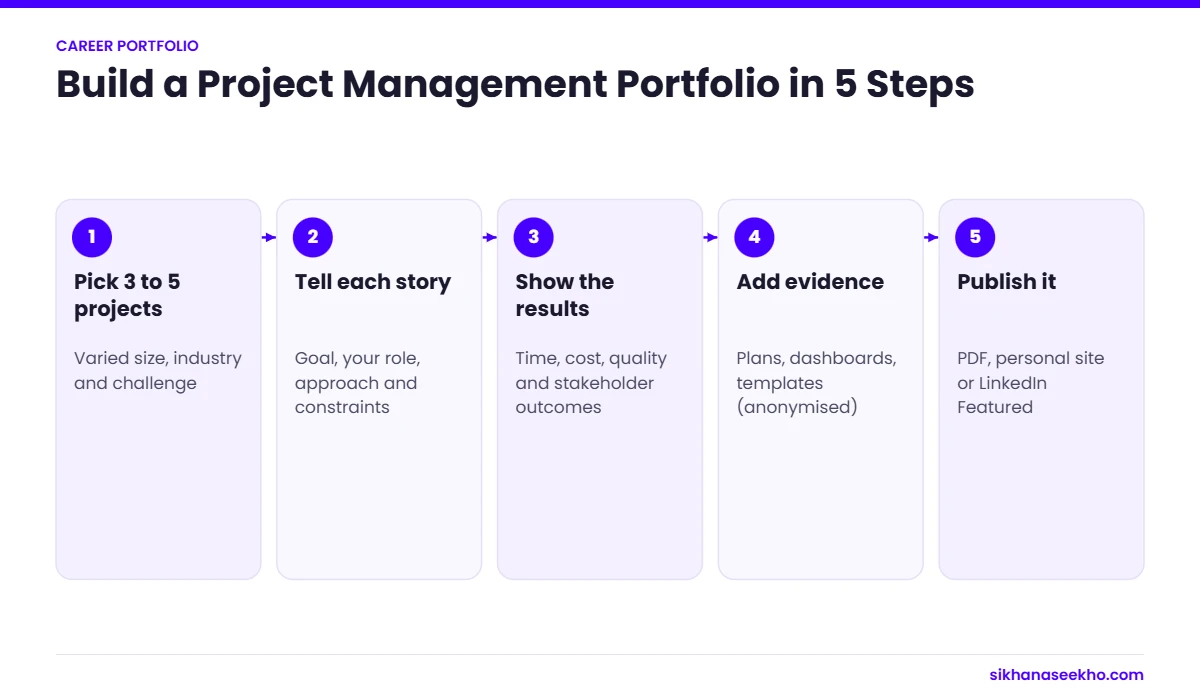
What to Include in Your Portfolio
When you build your portfolio, focus on content that tells your unique story and showcases your value. Here’s what you should include:
- Project Summaries: Briefly describe each project, including the objective, your role, team size, budget, and timeline.
- Key Achievements: Highlight your successes with quantifiable results, such as cost savings, improved efficiency, or increased revenue.
- Methodologies Used: Mention the project management methodologies (Agile, Waterfall, Scrum, etc.) and tools you used.
- Your Contribution: Specify your responsibilities and the impact you made. Use data and metrics wherever possible.
- Challenges and Solutions: Explain obstacles you faced and how you overcame them, demonstrating your problem-solving abilities.
- Outcomes and Business Impact: Describe the final results, focusing on how your work benefited the organization or client.
- Visuals: Add charts, dashboards, screenshots, or photos that help illustrate your process and results.
- Testimonials: Include recommendations from clients, team members, or stakeholders to add credibility to your portfolio.
Remember, your project management portfolio should be concise yet detailed enough to showcase your full range of skills and experience.
What to include for each project
| Section | What to write | Example |
|---|---|---|
| Project title and dates | Name, length and your role | Office move, 4 months, project coordinator |
| Goal | What the project had to achieve | Move 60 staff to a new floor with no lost working days |
| Your actions | The decisions and work you personally did | Built the schedule, ran 8 weekly meetings, managed 3 suppliers |
| Tools and documents | Templates and software you used | Gantt chart, RACI, risk register with 15 risks, Trello |
| Results | Measurable outcomes | Completed 1 week early and 5% under a $20,000 budget |
| What you learned | 1 or 2 honest lessons | Agree supplier access times in writing earlier |
Example figures are illustrative; use your own real numbers.
How to Select Projects for Your Portfolio
Selecting the right projects is crucial. Choose a mix of projects that demonstrate your versatility, adaptability, and expertise. Include projects of varying sizes, complexities, and industries if possible. For beginners, even academic, volunteer, or personal projects can be valuable additions to your portfolio.
Organizing and Structuring Your Portfolio
A logical and consistent structure makes your portfolio easy to navigate and impactful. Consider this format:
- Introduction: Briefly introduce yourself and your approach to project management.
- Project List: Create a table of contents or overview of the projects included.
- Project Case Studies: Dedicate a section to each project, following a consistent format.
- Skills and Tools: Highlight your proficiency in project management tools, software, and methodologies.
- Testimonials: Showcase recommendations and endorsements.
- Contact Information: Make it easy for employers to reach you.
You can present your portfolio as a PDF, a slide deck, or a personal website. Digital portfolios are especially effective, as they allow for interactive elements and easy sharing.
Tips for Beginners and Freelancers
If you’re just starting out or working as a freelancer, you can still create a strong portfolio:
- Include Volunteer and Side Projects: Any project where you manage tasks, timelines, or teams counts.
- Highlight Transferable Skills: Emphasize skills like communication, leadership, and organization.
- Use Templates: Leverage online templates to create a polished, professional look.
- Update Regularly: Keep your portfolio current with your latest projects and achievements.
- Making Your Project Management Portfolio Stand Out To make your truly shine.
- Quantify Results: Use numbers and data to show the impact of your work.
- Tell a Story: Frame each project as a narrative, focusing on challenges, actions, and outcomes.
- Balance Detail and Brevity: Provide enough information to showcase your skills without overwhelming the reader.
- Incorporate Visuals: Use charts, graphs, and images to make your portfolio engaging and easy to understand.
- Customize for Each Opportunity: Tailor your portfolio to highlight the most relevant projects for each job application.
Keeping Your Project Management Portfolio Updated Your project management portfolio is a living document. Regularly add new projects, update achievements, and refresh testimonials. This ensures you’re always ready to seize new opportunities and present your best self to employers.
What if you have no formal project experience?
Use work that already looks like a project. University group projects, society events, volunteering, home renovations and side businesses all have a goal, a timeline, people and constraints. Describe them in project language: scope, schedule, budget, risks and results.
Create practice documents if you have none. A charter, a schedule and a risk register for a realistic sample project show employers you know the tools. Label them clearly as practice work so nobody is misled.
Add a beginner credential such as CAPM or the Google Project Management Certificate, and include 1 or 2 of the assignments from the course as portfolio pieces.
Over the next 6 to 12 months, volunteer to coordinate something real at work or in your community, and replace practice pieces with real ones as soon as you can.
Where should you host your portfolio?
Keep it simple and easy to open. Good options are a 1-page website, a PDF of 4 to 6 pages, or a LinkedIn featured section linking to documents. Remove any confidential client details, names and figures you are not allowed to share; replace them with ranges or anonymised descriptions.
Put a link to it at the top of your CV and in every application. A recruiter who spends 30 seconds on your portfolio should see your best project, your role and the result immediately.
How many projects should you include?
3 to 5 is the sweet spot. Fewer than 3 looks thin; more than 5 makes recruiters skim. Choose projects that show different strengths, such as 1 about planning, 1 about people and 1 about fixing a problem, and update the portfolio every 6 months.
A 30-minute portfolio checklist
Before you share your portfolio, check 6 things: every project has a clear result with a number; your personal role is obvious; there are no confidential names or figures; documents open on a phone; your contact details are on the first page; and the newest project comes first. Updating it every 6 months takes about 30 minutes and keeps it ready for 2026 applications.
Should freelancers build a portfolio differently?
Yes. Lead with client outcomes and short testimonials you have permission to use, and show your process so clients can picture working with you.
Keep a private master version with full details, and share a public version with sensitive information removed.
FAQs:
What if I don’t have formal project management experience?
Include volunteer work, academic projects, or any experience where you managed tasks, people, or resources. These can demonstrate your project management abilities.
How many projects should I include in my project management portfolio?
Aim for well-documented projects that showcase a range of skills and experiences. Quality matters more than quantity.
Should I use a digital or physical project management portfolio?
A digital portfolio is more versatile and accessible, but having a physical copy can be useful for in-person interviews.
Can I include confidential information in my project management portfolio?
Never disclose sensitive details. Focus on your role, the challenges, and the outcomes without revealing proprietary information.
How often should I update my project management portfolio?
Update your project management portfolio after completing each significant project or at least twice a year to keep it current and relevant.
Keep learning
- Top YouTube Channels to Learn Project Management for Free
- Best Project Management Podcasts to Follow
- How to Get Your First Project Management Internship in the UK and US
- How to Write a Project Management Resume
- How to Transition to Project Management from IT/Engineering: Step-by-Step Guide
- Why Project Management Is One of the Top Careers