
A project management internship is a short, supervised placement where you support real projects, usually as an assistant or coordinator. In the UK they range from summer schemes to 12-month placement years; in the US, summer internships typically last 10 to 12 weeks. Apply early, show organisation skills, and bring evidence.
Real tips and resources to land a project management internship in the UK or US. Discover how to build skills, network, and stand out for your first internship.
Landing your first project management internship is a major step toward a rewarding career in project management. For students, recent graduates, and career changers in the UK and US, a project management internship offers hands-on experience, networking opportunities, and a chance to apply classroom knowledge in real-world settings. Whether you’re aiming for a summer placement or a remote opportunity, this guide will help you secure your first internship and set yourself up for long-term success.
Why a Project Management Internship Matters
A project management internship bridges the gap between academic learning and practical application. Employers value candidates who have demonstrated real-world project management skills, and an internship is the best way to gain this experience. Not only does a internship strengthen your resume, but it also helps you build professional connections and gain confidence in your abilities.
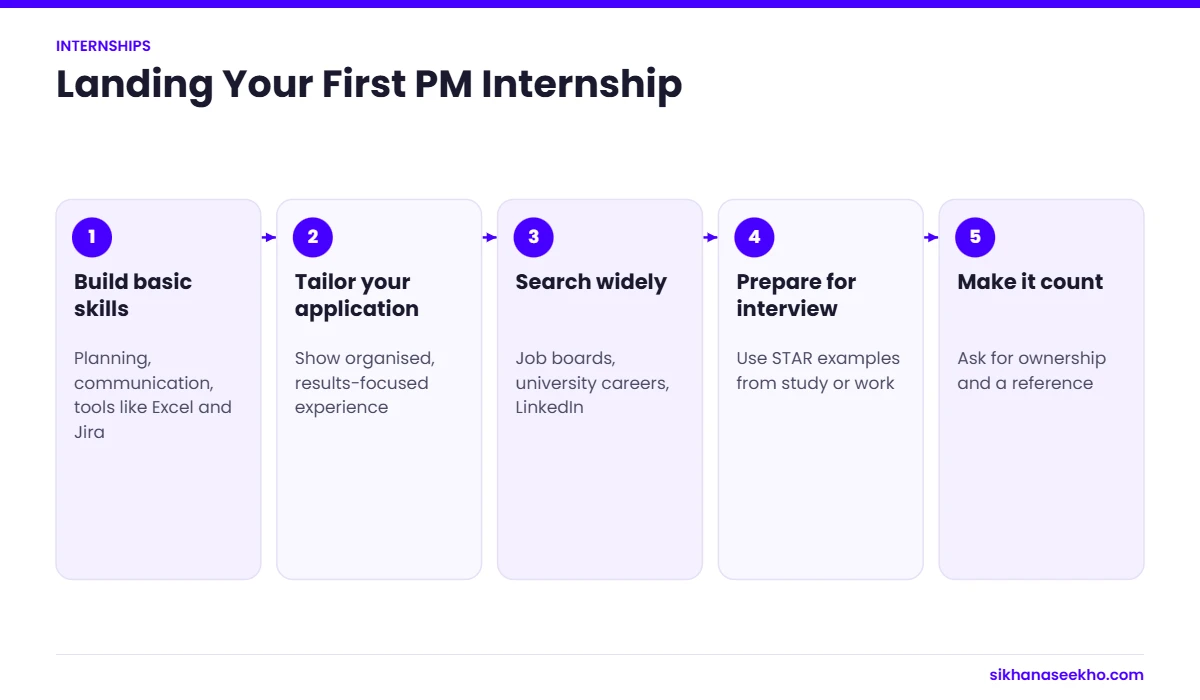
Build the Right Skills Before You Apply
Before you start applying for internship roles, focus on developing essential skills:
- Project Management Fundamentals: Study methodologies like Agile and Waterfall, and understand the basics of planning, scheduling, and risk management.
- Technical Tools: Get comfortable with project management software such as Trello, Asana, or Microsoft Project.
- Soft Skills: Communication, teamwork, leadership, and problem-solving are crucial for success in any internship.
- Certifications: Earning a CAPM (Certified Associate in Project Management) or completing a Google Project Management Certificate can boost your application.
Craft a Standout Application for Project Management Internship Roles
To secure a internship, you need a strong application package:
- Tailored Resume: Highlight relevant coursework, group projects, volunteer work, and any leadership roles. Use keywords from the internship description to align your skills with the employer’s needs.
- Compelling Cover Letter: Explain why you want a internship, what you hope to learn, and how your skills make you a great fit. Share specific examples, such as leading a student project or organizing an event.
- Portfolio: If possible, include a portfolio or list of projects you’ve managed, even if they’re academic or volunteer-based.
UK vs US project management internships
| Feature | UK | US |
|---|---|---|
| Common formats | Summer internships and 12-month placement years | Summer internships of 10 to 12 weeks |
| When to apply | From autumn for the following summer | From early autumn for the following summer |
| Typical sectors | Construction, engineering, consulting, public sector, tech | Tech, consulting, construction, healthcare |
| Useful credential | APM Project Fundamentals or PRINCE2 Foundation | CAPM or Google Project Management Certificate |
| Where to look | University careers services, company graduate pages, LinkedIn | University career centers, Handshake, company career pages, LinkedIn |
Deadlines vary by employer. Large graduate schemes often close months before the start date.
Where to Find Project Management Internship Opportunities
There are several ways to find your first internship in the UK or US:
- University Career Centers: Many universities have dedicated resources and partnerships with companies offering project management internships.
- Online Job Boards: Use platforms like LinkedIn, Indeed, Glassdoor, and FlexJobs. Filter by “project management internship” and location.
- Specialized Placement Programs: Organizations like Techway Placement in the UK offer structured internship programs, including remote options, hands-on experience, and job placement support.
- Company Career Pages: Check the websites of companies you admire for internship postings.
- Networking: Connect with professionals on LinkedIn, attend industry events, and join project management groups. Personal referrals can open doors to hidden opportunities.
Prepare for the Interview
Once you land an interview for a internship, preparation is key:
- Research the Company: Understand their projects, values, and industry.
- Review Common Questions: Be ready to discuss your experience with teamwork, time management, and problem-solving.
- Showcase Your Skills: Share examples of how you’ve managed deadlines, coordinated tasks, or resolved conflicts.
- Ask Questions: Demonstrate your interest by asking about the company’s project management approach and what interns typically work on.
Make the Most of Your Project Management Internship
After securing a internship, maximize your experience:
- Be Proactive: Volunteer for tasks, ask questions, and seek feedback.
- Network: Build relationships with your team, mentors, and other interns.
- Document Your Achievements: Keep track of the projects you work on, your contributions, and the skills you develop. This will help you update your resume and portfolio for future roles.
- Seek Feedback: Regularly ask for feedback to improve your performance and grow professionally.
What will you actually do as a project management intern?
Most interns support an experienced project manager. Typical tasks include updating schedules, preparing meeting agendas and minutes, tracking actions, maintaining risk and issue logs, collecting data for status reports, and coordinating with suppliers or internal teams.
Treat each task as evidence. If you update a risk register with 25 risks, help prepare a monthly report for a $2 million project, or coordinate 3 teams for a launch, write it down with dates. These details make your CV and interviews far stronger.
Ask for one piece of work you can own from start to finish, even a small one. Being able to say ‘I planned and delivered this’ is what turns an internship into a job offer.
Before you leave, ask your manager for feedback and, if it went well, for a reference or a LinkedIn recommendation.
How do you get an internship with no experience?
Show that you can organise. University projects, society events, volunteering and part-time jobs all involve planning, deadlines and people. Describe them as projects with a goal, a timeline and a result.
Add a beginner credential if you can. CAPM needs 23 hours of project management education, and the Google Project Management Certificate counts towards that requirement. In the UK, the APM Project Fundamentals Qualification is designed for people new to project work.
Apply widely and early. In 2026, many large employers fill internship places on a rolling basis, so applying in the first few weeks after a scheme opens improves your chances.
How do you turn an internship into a job offer?
Treat the last 4 weeks as an interview. Ask your manager early what a strong intern looks like in their team, then deliver against that. Volunteer for the tasks nobody wants, such as cleaning up the action log or preparing the monthly report, and do them well.
Keep a short weekly note of what you delivered. At the end, use it to write a 1-page summary for your manager: the projects you supported, the results and what you learned. It makes their decision easier and gives you material for future applications even if the team cannot hire.
What skills should you list on an internship application?
List organisation, written communication, spreadsheets, attention to detail and teamwork, and give a short example for each. Add any tools you have used, such as Excel, Trello, Asana or Microsoft Project, even from university work.
Are unpaid internships worth it?
Be careful. In the UK most interns doing real work must be paid at least the minimum wage, and many US employers pay interns too. Prioritise paid roles where you will support real projects.
FAQs:
When should I start applying for a project management internship?
Start searching at least three to six months before your desired start date. Many competitive programs have early deadlines.
Do I need project management experience to get an internship?
No, but highlighting relevant coursework, volunteer work, or leadership roles can strengthen your application.
Are remote project management internships available?
Yes, many organizations now offer remote project management internships, providing flexibility and access to global opportunities.
What tasks will I do during a project management internship?
You’ll assist with project planning, scheduling, documentation, stakeholder communication, and sometimes quality control or risk management.
How can I stand out as a project management intern?
Show initiative, communicate clearly, be a team player, and document your achievements. Building strong relationships and asking for feedback will also help you succeed.
A internship is your gateway to a thriving career in project management. By building the right skills, crafting a tailored application, and making the most of your experience, you’ll be ready to take the next step on your professional journey. Start your search today and set yourself up for long-term success!
Keep learning
- How to Write a Project Management Resume
- How to Transition to Project Management from IT/Engineering: Step-by-Step Guide
- Why Project Management Is One of the Top Careers
- Top 10 Mistakes Project Managers Make and How to Avoid Them
- Best books for aspiring project managers in 2026
- Best AI Tools for Project Managers in 2026 (Beyond ChatGPT)