
Project management isn’t just about Gantt charts and deliverables; it’s about values, integrity, and the code of ethics. Code of Ethics guides us through the often complex and challenging terrain of project execution. As PMP-certified project managers and trainers, we understand that adherence to a code of ethics is the bedrock upon which successful projects are built.
Why a Global Code of Ethics Matters:
In an interconnected world, where projects transcend geographical boundaries and cultures, a universally recognized code of ethics for project managers becomes not just desirable but essential. It provides a shared ethical framework that transcends borders and unites professionals in a shared commitment to ethical conduct.
The Pillars of a Global Code of Ethics for Project Managers:
- Integrity: Upholding the highest standards of honesty and truthfulness in all interactions, irrespective of the project’s location or the stakeholders involved.
- Respect: Treat all team members, colleagues, and stakeholders with respect, regardless of their background, beliefs, or status. Promoting diversity and inclusion within project teams.
- Accountability: Taking responsibility for project outcomes and decisions and being willing to acknowledge and rectify mistakes when they occur.
- Transparency: Ensuring that project communications are transparent and that stakeholders are informed of progress, risks, and issues.
- Quality and Safety: Prioritizing the quality of project deliverables and the safety of all project team members and stakeholders in accordance with globally recognized standards.
- Stakeholder Engagement: Acting in the best interests of all project stakeholders and striving to balance their needs and expectations while meeting project objectives.
- Confidentiality: Safeguarding confidential and proprietary project information and sharing it only with authorized individuals and entities.
The Question That Echoes Globally:
In a world where project management knows no borders, the question we must ask ourselves is this: How can we collectively uphold this universal code of ethics to ensure the integrity, success, and sustainability of projects on a global scale?
As project managers, trainers, and professionals, it is our shared responsibility to champion ethical behaviour in project execution. By adhering to these universal principles, we not only strengthen our profession but also contribute to the growth and well-being of the global community.
Let’s open the floor for discussion: What are the key challenges you’ve encountered in upholding these ethical principles in your global project management endeavours? Share your thoughts, experiences, and insights. Together, we can shape the future of ethical project management.
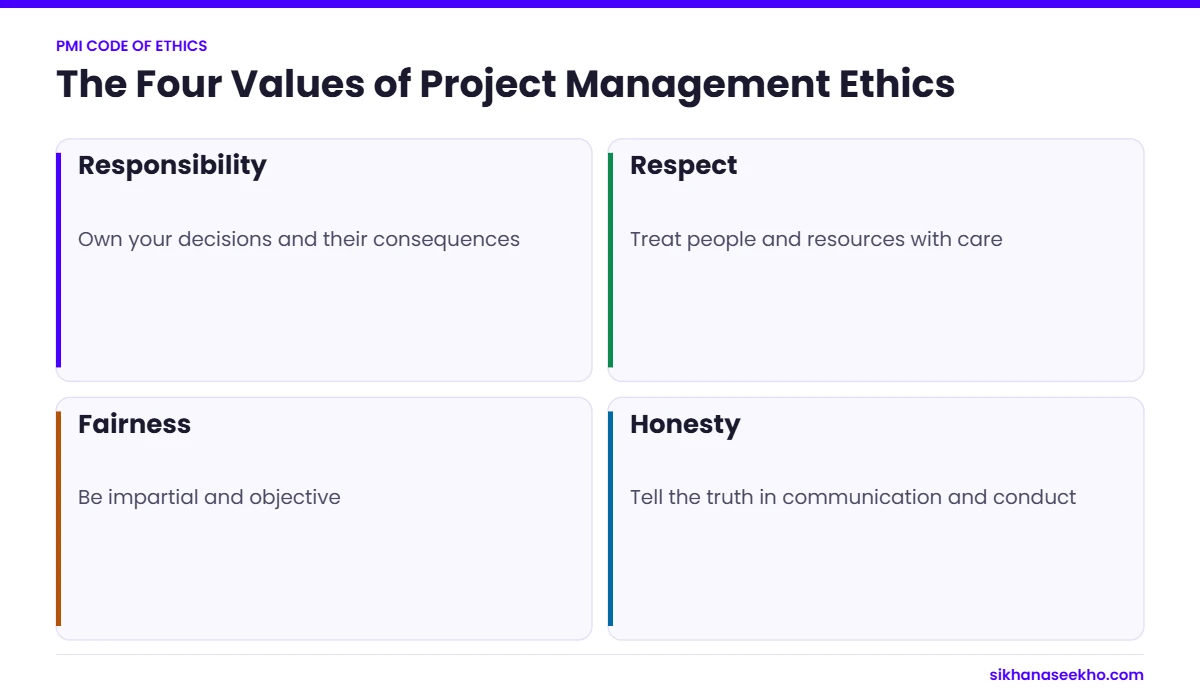
The four values in PMI’s Code of Ethics
PMI’s Code of Ethics and Professional Conduct is built on four values that apply to every project manager, wherever they work:
- Responsibility: owning your decisions, including the ones you do not make, and their consequences.
- Respect: valuing yourself, others and the resources entrusted to you.
- Fairness: making decisions impartially and objectively, and declaring conflicts of interest.
- Honesty: understanding the truth and acting truthfully in communication and conduct.
Ethical dilemmas project managers face
- A sponsor asks you to report a project as green when it is behind schedule.
- A supplier offers a gift during a procurement decision.
- A team member asks you to hide a quality defect from the customer.
- You discover a colleague has claimed credit for someone else’s work.
In each case the ethical response is similar: raise the issue with the right person, be transparent about the facts and follow your organisation’s policies. Staying silent is rarely the ethical choice.
A simple way to make ethical decisions
- Identify the facts and the people affected.
- Check the relevant laws, policies and the Code of Ethics.
- List the options and the likely consequences of each.
- Choose the option you could explain openly to everyone affected.
- Act, document your reasoning and follow up.
Ethics on the PMP exam
Ethics questions appear throughout the PMP exam. The correct answer is almost always the one that is honest, transparent and escalates problems through proper channels. Practise these scenarios with our 200 free PMP practice questions.